
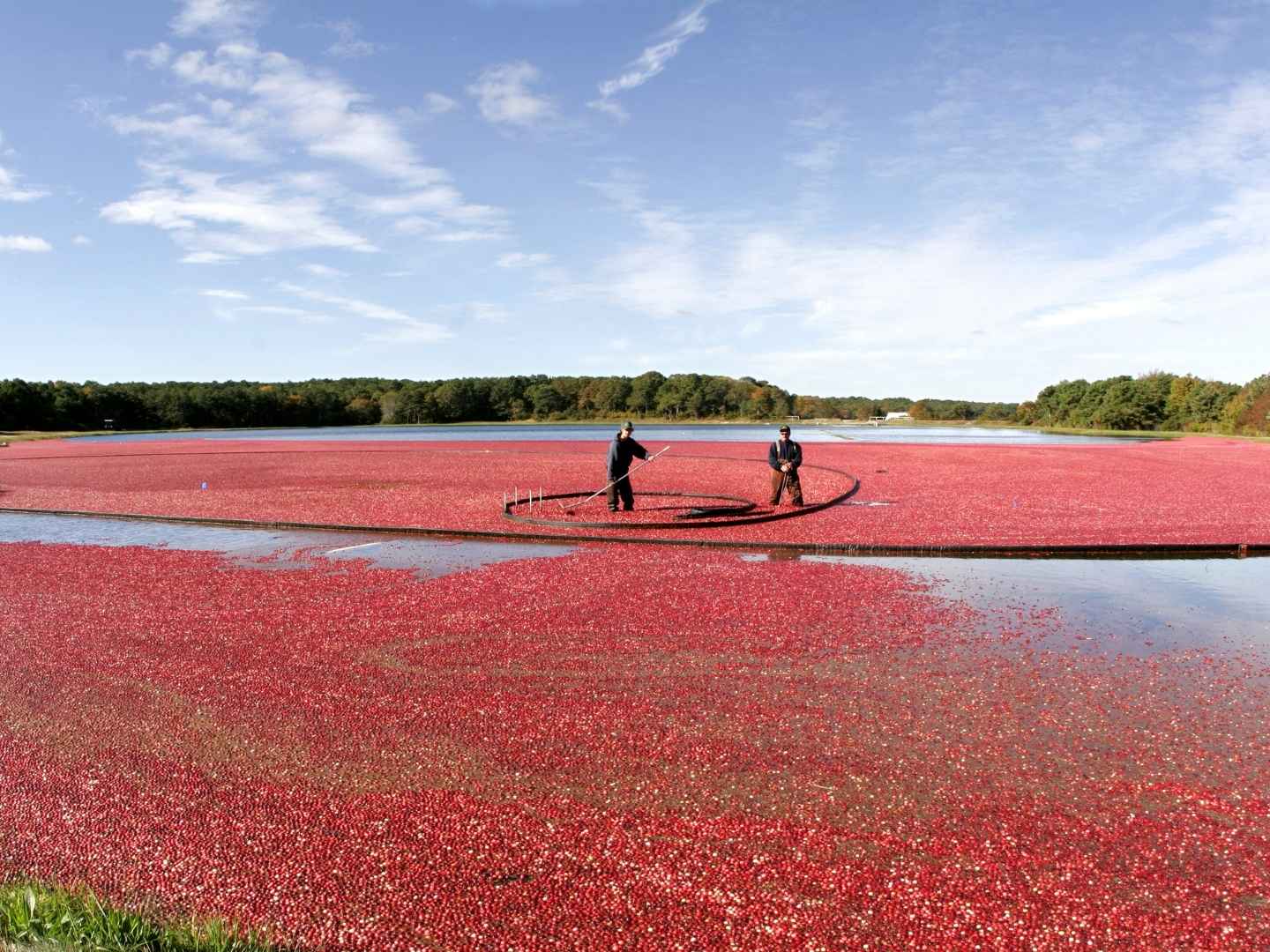
There’s something wonderfully Cape Cod about spending a fall afternoon learning how something as familiar as a cranberry actually gets from a vine to your Thanksgiving table.
Cranberries have been part of Cape Cod’s landscape for more than 200 years, and by fall, the region’s working bogs become one of the most distinctive sights on the Cape. Green vines give way to bright red berries, and when harvest begins, the bogs are flooded so the ripe cranberries can be gathered from the surface.
Catching a glimpse of those red fields from the road is great, but walking through a working farm and hearing the history straight from the growers is a completely different experience. Luckily, several historic bogs sit within an easy drive of our Cape Cod bed and breakfast, offering guided tours throughout the fall.
And if you time your visit for harvest season? Even better.
Here’s what to know before you go.
When Is Cranberry Harvest Season?
The short answer: fall.
Cranberry harvest generally begins in mid-September and can continue into December. Mid-September through October is typically the best time to see the classic Cape Cod cranberry scene, when bogs are flooded and ripe berries float to the surface.
But there’s more happening in a cranberry bog than just harvest.
The growing season begins much earlier. Cranberry vines bloom from roughly mid-June through mid-July, when small flowers appear on the plants. From mid-July through mid-September, the berries are growing and changing from green to their familiar shades of red. Then comes harvest.
That means there’s always something different to see depending on when you visit. If you’re hoping for those famous flooded bogs covered in floating red berries, aim for the fall harvest. If you visit earlier in the summer, you’ll see the plants at a completely different stage.
And because cranberry farmers don’t all harvest at exactly the same time, there isn’t one magical weekend when every bog suddenly turns red. Mother Nature, weather, and the individual farm’s schedule all have a say in the matter.
So, How Do Cranberries Actually Grow?
Here’s where things get interesting.
First, cranberries do not grow underwater.
They grow on low, sprawling vines in specially prepared bogs made up of layers of sand, peat, and organic material. During the growing season, the vines spread across the ground and produce the berries you’ve probably only thought about in sauce form.
The flooding happens during harvest.
Cranberries have tiny air pockets inside them, which means ripe berries float. Farmers flood the bogs, use specialized equipment to loosen the berries from the vines, and let the fruit rise to the surface. Suddenly, a field that looked relatively ordinary becomes a sea of bright red berries.
It is one of those things that sounds completely strange until you see it happen.
What You’ll See on a Cranberry Bog Tour
A good cranberry bog tour is about much more than taking a picture of red berries.
You may see cranberry vines in bloom, growing fruit, or being harvested, depending on when you visit. You’ll also get a look at the equipment and techniques that keep these working farms running year after year.
Many tours are led by the growers themselves, which means you’re hearing about cranberry farming from someone who actually spends their days in the bogs. Some focus more heavily on the history and cultivation of cranberries, while others give you a behind-the-scenes look at harvesting, processing, and the equipment used on the farm.
In other words, you aren’t just getting the pretty part. You’re getting to see how the whole operation works.
Cranberry Bog Tours to Put on Your List
Annie's Crannies
In Dennis, right next door to us, Annie's Crannies is the most personal cranberry tour on the Cape.
The farm is run by Annie Walker herself, whose grandfather Ben was a legendary Dennis cranberry grower and fisherman. Annie left a career working on Broadway productions to come back and continue the family tradition, which is one of the stories you'll hear on the tour. And Dennis, for the record, is considered the birthplace of the cultivated cranberry, so this farm puts you at the very roots of the industry.
One thing to know: you won't see the flooded, floating cranberry harvest here. What you will see is antique cranberry cleaning equipment in action, and Annie may hand you a pair of gloves and put you to work cleaning your own berries. The small bogside gift shop is worth a stop on its own for the honey, beeswax candles, and homemade jams.
Cape Cod Cranberry Bog Tours
With farms in East Sandwich, West Barnstable, and Chatham, Cape Cod Cranberry Bog Tours offers walking tours led by an experienced cranberry grower with more than 35 years in the business. The tours cover the history and cultivation of cranberries while giving you a chance to see the bogs at different points in the growing season.
Visit in June or early July, and you may catch the bogs in bloom; visit later in the year, and you’ll see the fruit developing or the harvest underway.
Tours are offered by reservation, with the exact timing and location dependent on weather and the farm’s work schedule.
Cranberry Bog Tours in Harwich
Cranberry Bog Tours is a family-run 17-acre cranberry farm in Harwich. Their tours are designed for adults and focus on the year-round work involved in growing cranberries.
One interesting difference here: the tour follows the cranberry-growing calendar, explaining what happens throughout the year rather than simply focusing on harvest day. The farm also has a farm stand and gift shop where you can browse cranberry-related products after the tour.
Halls Cape Cod Cranberries
For a deeper look at Cape Cod’s cranberry-growing history, take a look at Halls Cape Cod Cranberries in Harwich.
The Hall family has been growing cranberries on Cape Cod for eight generations, and their farm is directly across from the Historic North Harwich Cranberry Screenhouse, the birthplace of the commercial cranberry industry on Cape Cod in the 1840s. Tours are offered by reservation and combine details about the working farm with the family’s history in cranberry growing.
During the fall harvest, the family’s Depot Bog comes alive with the traditional water-harvesting process, when ripe cranberries float to the surface before they’re gathered. The farm also has antique equipment on display and a shop featuring cranberry products and local goods.
Celebrate Cranberries at the Harwich Cranberry Arts & Music Festival
If you're visiting in September, you can combine cranberry season with one of the Cape’s longtime fall traditions: the Harwich Cranberry Arts & Music Festival.
Held every September at the Harwich Community Center on Oak Street, the festival has been celebrating Cape Cod's signature crop for nearly 50 years. You'll find more than 150 juried crafters, food vendors, family activities, and the CranJam Music Festival tent with live bands playing both afternoons. The festival is entirely volunteer-run, and proceeds go toward scholarships for graduating Harwich-area high school seniors.
See the Cranberry Bogs From the Train
Want to see the bogs without putting on your muck boots?
The Cape Cod Central Railroad offers another fun way to see the Cape’s cranberry country. Its scenic route travels through salt marshes, woodlands, and cranberry-growing areas between Hyannis and Buzzards Bay, giving you a completely different perspective than you get from the road.
And fall is one of the prettiest times to ride. During harvest season, the contrast between the green vines, flooded bogs, and brilliant red berries makes for some spectacular views from the train window.
A Few Tips for Visiting a Cranberry Bog
A cranberry bog tour isn't quite the same as wandering through a museum, so a little preparation helps.
· Reserve ahead. Many tours require advance reservations, and some have minimum group sizes. Check directly with the farm before you go.
· Wear comfortable shoes. Several tours are walking tours, and farm paths aren't exactly designed for your favorite sandals.
· Bring a camera. Especially if you're visiting during harvest.
· Bring binoculars if you have them. Cranberry farms can attract interesting birds and other wildlife, too.
· Call ahead if you're chasing the harvest. Some farms announce harvest dates in advance; others don't know their exact schedule until it's almost here. Weather and growing conditions can shift things, so if you're hoping to see the flooding in person, check with the farm or tour operator before heading out.
· Stick to public viewing areas. A cranberry bog is a working farm, not an invitation to wander into the fields for the perfect Instagram shot. Many bogs along Cape Cod's roads are on private property, so admire from designated spots only.
Make Cranberry Season Part of Your Cape Cod Stay
There are plenty of reasons to visit Cape Cod in the fall, but getting an up-close look at a cranberry bog during harvest season is one of our favorites.
Start with a cranberry bog tour, stop for lunch somewhere along Route 6A and keep an eye out for a flooded bog on your drive. If you’re lucky enough to catch one in action, you’ll understand why cranberry season has become such a beloved part of fall on the Cape.
And when you’re ready to trade the farm paths for a comfortable bed, book your stay at the Inn on Main. We’re right in Yarmouth Port, close to the historic villages, scenic roads, restaurants, and fall activities that make this one of our favorite times of year on Cape Cod.
Just don’t be surprised if you leave with a new appreciation for cranberry sauce.